Which Test Finds the Limiter: Lactate, VO2 Max or Metabolic?
10 November 2026
Home Lactate Testing for Cyclists: A Repeatable Protocol
14 November 2026
AI-generated header image for: Gran Fondo Race Day Tactics: Pacing, Position, Final Hour
A 2026 peer-reviewed analysis of the Quebrantahuesos Gran Fondo tracked split times from 6,589 finishers and found that the fastest riders did not win with a fast start. They paced the early climbs more conservatively, reduced pacing variability, and separated on the final major climb (Sánchez-Jiménez et al., Sport Sciences for Health, DOI: 10.1007/s11332-026-01828-0). That matters on any sportive where the last ninety minutes decide far more than the first thirty. This guide treats race day as a tactical problem: where to spend matches, when sitting in pays, how to hold position before a climb instead of fighting on it, and how fuelling becomes the fourth discipline in the final hour. You will work through the numbers that make tactics work, the first climb, mid-race positioning, deliberate match spending, the final ninety minutes and your pacing range, plus the cost of one blow-up, what the study can and cannot tell you, and a self-test with two sessions to rehearse before race day. The takeaways are direct: pace low, position early, fuel from hour one. Ready to turn evidence into your race plan? Book a Cycling Breakthrough Call: https://waytochamp.com/schedule
Before the Start: The Numbers That Make Race-Day Tactics Work
FTP (functional threshold power): the highest watts you can hold for about an hour. W/kg (watts per kilogram) determines climbing speed. Normalized power weighs surges, so on a hilly course it sits well above your true average.
Set a race ceiling, not a race average. Over 4 to 6 hours, set a ceiling well below your threshold; only the climbs that decide the selection justify going deeper.
Pull your own numbers: total time, normalized power, variability index (normalized power divided by average power), and time above threshold.
Measure durability, not freshness. Compare final-hour power to hour one across a 4 hour ride. A large final-hour power drop reflects the wider pacing range seen in slower finishers in the Quebrantahuesos data, track yours across long training rides. Build fatigue resistance off the bike too.
TSS and CTL give context, not tactics. A rider with modest CTL who paces well beats a fresher one who opens at threshold. Know where the categorized climbs fall before you set your ceiling.
Phase 1: The First Climb Decides Less Than Your Legs Suggest
A 2026 analysis of 6,589 finishers at the 2025 Quebrantahuesos Gran Fondo found faster cyclists started more conservatively and separated progressively from slower riders, most at the finish.
The first 20 to 30 minutes feel free and cost the most: as a rule of thumb, a 30-second surge at minute 10 is free; you pay it at hour five.
Ride the opening climb at a ceiling you can repeat, not a personal best. On a long sportive with multiple categorized climbs, the first ascent should leave you able to speak in short sentences.
Let the wheels go. Riders who chase every move in hour one drift backwards in the last two; in a large gran fondo national series field, another group is minutes behind.
At 60 minutes, check: normalized power meaningfully above plan, or heart rate rising while power falls, means you overspent. Short events tolerate a hard start; five hours does not.
Phase 2: Sitting In, Holding Position and the Mid-Race Climbs
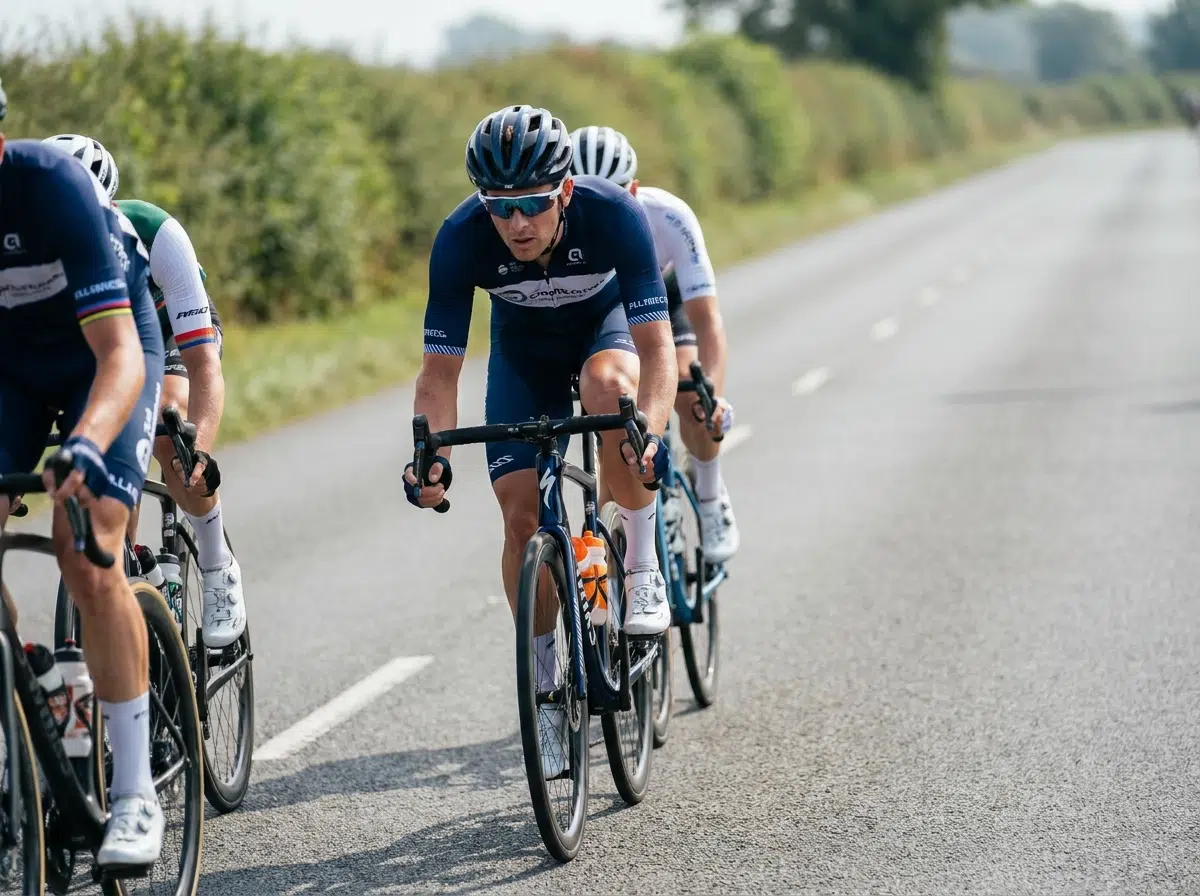
By hour two, the race is about where you sit. Drafting is the biggest free energy source on course. Sitting in at 25 mph (40 km/h) costs a fraction of front-riding power, up to 40 percent savings; bank it for the final climb.
Move up before narrow roads, hairpins, feed zones and climb bases. Gaining 20 places on a 3 percent grade is cheap; on a 10 percent ramp it is expensive and often impossible.
Choose your group by speed, not ego. A well-organized group 1 mph (1.5 km/h) below your maximum beats riding solo at tempo for two hours.
Mid-race climbs make the selection, but the fastest Quebrantahuesos finishers spent proportionally less of their day inside them. Better approach speed and position got them over sooner.
Guard your front wheel and line. A crash, mechanical or unplanned stop costs more than any pacing error; practice holding a smooth wheel on local fast rides.
When Sitting In Pays and When It Costs You
Sitting in pays when the group is steady, the road flat or rolling, and pace sits inside zone 2 to tempo: free speed worth 15 to 40 percent of your energy needs, carbohydrate saved for the climbs that matter.
It costs you when the bunch surges out of every corner, is too large and twitchy to hold a wheel safely, or demands repeated 30-second efforts above threshold to stay on terms. Dropping back to a smoother group is usually faster over four hours, even though it feels like losing ground.
Judge by normalized power, not average watts. A surging bunch can produce higher normalized power than riding alone at steady tempo, the opposite of what your legs suggest. (This is a practical check, not a published finding.)
On a climb, sitting in works only while the pace is sustainable. Once it pushes you above your climb ceiling, let the wheel go and ride your own rhythm. Hanging on too long above your climb ceiling can cost significant time in the hours that follow.
Position Before the Climb, Not On It
Once the pace is sustainable, the next decision is where you take it. Position before the climb, not on it.
Two minutes before the road tilts up, move. Advancing 20 places on the flat costs a fraction of the same job on a 10 percent ramp, and the move is safer because the field is spread out.
If a technical descent follows, be in the front third of your group so you can follow strong descenders rather than sit behind hesitant ones. Treat descending and cornering as tactics, not as a separate skill: even 5 seconds per hairpin across 20 hairpins, to take one illustrative example, is 100 seconds lost without a hard pedal stroke.
In the final hour, positioning protects a paced effort. Avoid the stop-start surges that turn steady tempo into repeated matches.
Rehearse it: on group rides, compare power in the wheels versus on the front. That gap is your measurable positioning cost.
Spending Matches Deliberately: Resolving the Apparent Contradiction
Position is cheap before the climb. Effort is not.
Coaches say spend your matches on the climbs. The split-time data shows faster riders spending proportionally less race time in the decisive mid-race climbs. Both hold true. Effort allocation is not time distribution. The fastest riders went deep where selection happened and cleared the climb quickly, shrinking its share of the day.
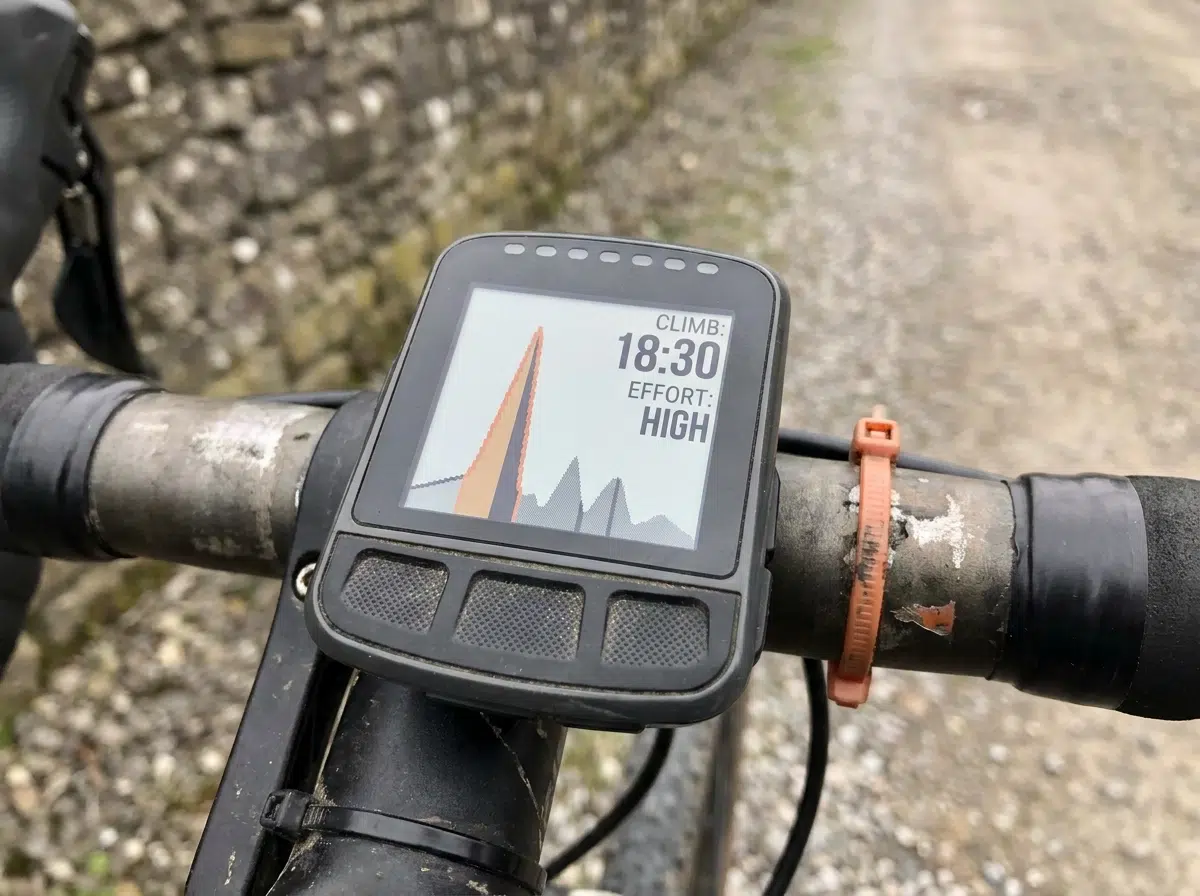
As a coaching guide: a deliberate match looks like a 3 to 6 minute effort just above threshold to make the selection on a narrow climb, or a measured bridge back to the front group. It is written into your pacing plan before the start. As a coaching guide: an accidental match is repeated 20 to 40 second surges to hold a wheel mid-bunch. That lifts normalized power, widens your pacing range and shows as a fade in the final hour.
Pick your decisive climb in advance, usually the last categorized ascent or the one before the run-in, and treat every earlier climb as a place to be efficient, not heroic.
Label this coaching judgement, not a Quebrantahuesos finding: that study measures pace distribution, not rider intent.
Phase 3: The Final 90 Minutes and Your Pacing Range
Having chosen where your matches go, consider what the final 90 minutes cost. The Quebrantahuesos study measured how finishers separated at the end, not time lost inside a 90-minute window; that framing comes from athlete files.
Pacing range, the spread between your hardest sustained block and your easiest, matters more than any single split. Finishers under 6:00 h recorded the lowest pacing range of any group (p < 0.001). They rode closest to even effort.
Narrowing it on a hilly course does not mean riding flat; climbs still have to be climbed. Limit the extremes.
The last hour cashes in earlier decisions. Arrive with carbohydrate left and no large fatigue debt, and you hold tempo where others merely survive; that is where the data spread widest.
Expect the final climb to feel harder than its watts suggest: power falls while perceived effort rises. Protect the ceiling you set; do not chase an unavailable time.
Fuelling: The Fourth Discipline of the Final Hour
Nothing in the pacing research covers nutrition, so treat everything below as standard coaching practice and validate it in your own training.
Start eating in the first hour. A rider who waits for hunger is already behind at tempo and cannot catch up.
Rehearse your carbs per hour on training rides matching your expected race duration, then repeat the exact plan on race day: what you carry, what you collect at feed zones, what you skip.
Practice eating where you will actually race. In the wheels, at tempo, on a descent. Not sitting up alone on a flat road where it is easy.
Fluid and sodium matter across a long day. An exposed Alpine climb is not the place to test a new gel, drink or salt tab. Carry only what you have already trained with.
Fuel from hour one and the final climb becomes a pacing problem rather than a survival problem.
The Cost of One Blow-Up
Blow-ups are where fueling plans fail. A blow-up at hour four is rarely fitness. It is a pacing and fueling debt: glycogen depleted, fat oxidation and lactate clearance squeezed, and sustainable power well below hour two.
Recovering from a mid-race overreach typically demands a sustained spell of easy riding. On a fondo with a large field, your group is gone by then.
Rule: if you cannot hold target power and heart rate is not recovering on a descent, drop to zone 2 immediately, eat and drink, and give yourself 10 minutes before deciding anything else.
This is our metabolic model, not a finding from the Quebrantahuesos analysis, which describes pacing behavior in finishers, not the physiology behind it. Physiology matters too: riders with high VLamax (the maximum rate at which your body produces lactate, measured through lactate testing) lean more on carbohydrate, so pacing and fueling discipline matters more, not less.
What the Quebrantahuesos Study Shows, and What It Cannot Tell You
That VLamax reading is our interpretation. The pacing evidence cited above comes from one paper, so be precise about what it does and does not say.
The study, 6,589 finishers, 2025 edition, detailed above, found the fastest riders started conservatively and separated at the finish (lowest pacing range, p < 0.001).
It cannot tell you about sitting in, positioning, drafting or fuelling, none of which it measured, and it does not quantify time lost inside a final 90 minute window. It covers one event, one year, one mass-participation field.
Why it matters: real finishing data from thousands of riders shows the fastest were not the ones who went hardest early, the opposite of most riders’ instinct.
Cite the primary source, not aggregator citation counters. Research on mass-participation pacing remains thin, so coaching practice here rests on applied experience and rider data.
Rehearse It: A Self-Test and Two Sessions Before Race Day
What the data cannot prescribe, you rehearse.
Self-test: on a 4 hour ride, hide the head unit and hold planned race power for 60 minutes. Review normalized power and the hour one versus hour four gap. Target under roughly 5 percent fade (a heuristic, not a study threshold).
Session A: 3 x 20 minutes at race power, four to five hard 20 second surges inside each block, 5 minutes easy between sets. This rehearses the cost of holding position in a lively group.
Session B, negative split: 2 hours, first hour noticeably below threshold, second hour building toward tempo if you have the legs. This trains the pacing discipline the data links to faster finishers.
Rehearse fuelling with the exact products and quantities you will use on race day, and log how the final hour felt.
Fading late after years on one plan? Lactate testing shows whether threshold, VO2max, fat oxidation or VLamax is the limiter. That is the difference between fixing your pacing and fixing your engine.
The Takeaways: Pace Low, Position Early, Fuel From Hour One
If your rehearsals confirm a narrow pacing range and a fade under five percent, protect both on race day.
- Pace low early. Split-time data from 6,589 Quebrantahuesos finishers shows the fastest riders started conservatively and separated late. Ride the first hour below your ego, not at your maximum.
- Spend matches where they matter. Go deep on the climbs that decide the selection, stay efficient through mid-bunch surges, and hold position before the road tilts up, where moving up is cheap.
- Fuel from hour one. Eat early; fuelling and pacing work together to hold that range.
Still fading late? Book a Cycling Breakthrough Call to find out whether the limiter is pacing or your engine.
Conclusion
The evidence and the rehearsal sessions above give you a complete race-day framework. If late-race fade persists after applying these tactics, a Cycling Breakthrough Call can identify whether the limiter is your pacing plan or your physiology, book one at https://waytochamp.com/schedule.